Whenever the Patek Philippe replica watch UK manufacturer announces the discontinuation of a specific timepiece, the market almost invariably witnesses the same chain reaction: prices surge rapidly, collector sentiment intensifies, those on the sidelines grow anxious, and those who acquired the watch early often emerge as the ultimate winners.
Those who truly capitalize on this windfall are rarely merely lucky. More importantly, they identified—ahead of time—signals that were overlooked by the majority and positioned themselves strategically before market sentiment had fully taken hold. Speaking of which, what often comes to most collectors’ minds is the Patek Philippe Nautilus replica.
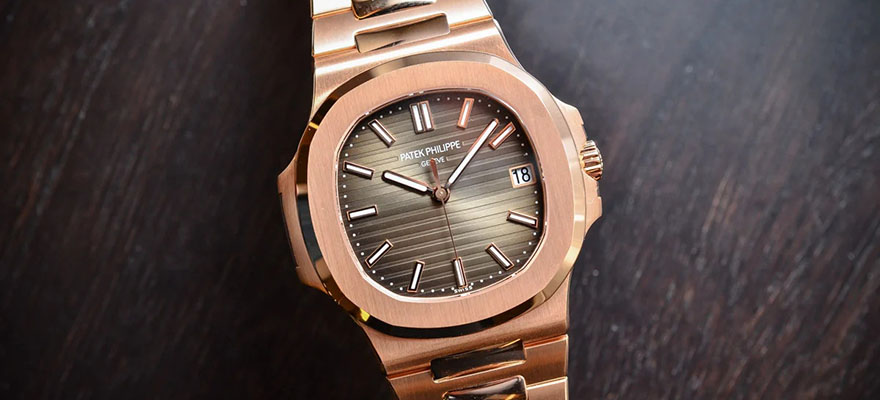
The quintessential example of this phenomenon is the Patek Philippe Nautilus 5711 replica, which was discontinued in 2022. The moment the news broke, the watch’s price on the secondary market skyrocketed within an incredibly short timeframe; transaction prices far exceeded the official retail price, making it one of the most talked-about phenomena in the watch market. Fast forward to 2024, and Patek Philippe once again discontinued 16 models; concurrently, the prices of the remaining models still in production rose by 7%. This serves as yet another reminder that once a brand signals a clear product adjustment, the market tends to react swiftly, leaving buyers with very limited time to assess the situation and take action.
For many, the true regret is not having “paid too much,” but rather realizing “what was happening only after it was too late.” This is because, in the high-end watchmaking market, price fluctuations are never determined solely by the timepiece itself, but by a confluence of factors—discontinuation expectations, market hype, collector sentiment, and the scarcity intentionally engineered by the brand’s strategy.
Had you consistently monitored the right indicators and timely deciphered the logic underpinning these shifts, you would have had every opportunity to secure a more advantageous position before the current market rally even began.
Next, let’s explore how you can learn to read these critical signs in advance—before the general public even catches on.
Key Takeaways
Every instance of a cheap fake Patek Philippe model being discontinued often catalyzes a revaluation of market prices. A prime example is the withdrawal of highly sought-after models—such as the Nautilus 5711—from the catalog; following such moves, prices on the secondary market have skyrocketed, sometimes reaching multiples of the original retail price. This demonstrates that, for Patek Philippe, the disappearance of a timepiece from its product catalog is not merely a routine product adjustment; rather, it frequently acts as a significant catalyst driving substantial price appreciation.
When attempting to predict which models might be nearing discontinuation, the service life of the movement is often one of the most telling indicators to watch. Classic movements—such as Calibre 215 and Calibre 240—typically undergo a lifecycle of approximately 15 to 20 years before gradually entering the phase of being replaced or discontinued. Consequently, when a specific movement has been in service for many years yet remains housed within current production models, this in itself may signal that the series in question is approaching the end of its product lifecycle.
Furthermore, material configurations and brand strategy constitute other key factors driving the replica Patek Philippe factory to implement strategic discontinuities. The scarcity of steel models, in particular, warrants close attention. Take the Nautilus 5990/1A as an example: its discontinuation reflects, to some extent, the fact that excessive premiums on the gray market had begun to undermine the brand’s ability to control the scarcity and high-end positioning of its products. When the secondary market hype surrounding a specific steel model becomes excessive—and its price diverges too drastically from the official retail structure—the brand often chooses to discontinue the model as a means of reclaiming control and further reinforcing the product’s exclusivity and sense of scarcity.
However, not every discontinued model is destined to become the next “dark horse.” Discontinuation in itself does not automatically equate to a price explosion, nor does it guarantee that the watch’s collectible value will be realized rapidly. Models such as the World Time 5230P-001 (replica Patek Philippe Complications collection) illustrate this point: if a timepiece experiences weak market demand during its active production period, its subsequent discontinuation does not necessarily guarantee that it will quickly garner significant enthusiasm within the collector community. In other words, discontinuation is merely one variable; the true determinants of a watch’s future performance remain its original market acceptance, its degree of scarcity, and its enduring appeal among collectors.
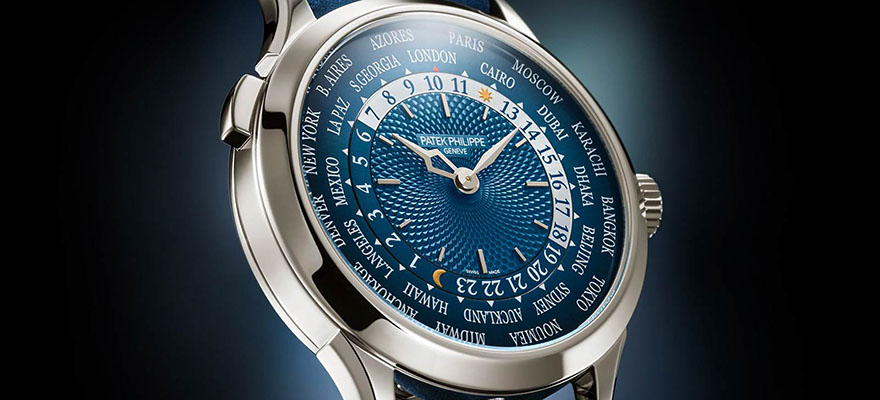
Therefore, the true key lies not in chasing rising prices after news of a model’s discontinuation is announced, but rather in making an early assessment and strategic positioning before the market has fully reacted. The ideal entry point is typically between 6 and 18 months before the potential discontinuation. During this phase, one should focus on observing several core signals: whether the movement is nearing the end of its lifecycle, whether the case diameter deviates from current aesthetic trends, whether the choice of materials appears unbalanced, and whether inventory levels at authorized dealers have begun to tighten noticeably. By acquiring the timepiece before these indicators have been fully priced in by the general public, one stands a far better chance of capturing asymmetric upside potential than by chasing premiums after the official discontinuation announcement has been released.
The 5Ws
Who is This for?
It is primarily suited for watch investors seeking to capitalize on Patek Philippe’s discontinuation patterns, as well as for seasoned replica watches UK collectors who are highly attuned to market cycles. For this demographic, the core objective is not to chase prices at the peak of market hype, but rather to anticipate—as early as possible—which specific models are likely to be removed from the catalog, thereby allowing them to establish their positions before secondary market prices undergo a comprehensive surge.
What Is The Strategy?
Essentially, this is a systematic analytical framework designed to identify models that are potential candidates for discontinuation. It does not rely on isolated news reports or market rumors; instead, it employs a multi-dimensional cross-verification process. This includes assessing the service lifecycle of the movement, whether the case dimensions deviate from current trends, any imbalances in material configurations, shifts in the model’s positioning within the product catalog, and subtle signals regarding allocation and inventory levels from authorized dealers. By piecing together these clues, one can—at an earlier stage—filter out the specific models most likely to face discontinuation.
When Is The Opportunity?
The truly valuable entry windows typically emerge between 6 and 18 months before the brand officially announces a model’s discontinuation. This phase often coincides with a period when market information has not yet been fully digested, making it the prime time for “expectation gaps”—discrepancies between market perception and future reality—to emerge. In particular, just before Patek Philippe’s annual new product launches or catalog updates, those familiar with the brand’s operational rhythm often have the opportunity to spot key changes ahead of the curve.
Where Does Pricing React?
Price shifts are first reflected within the global secondary watch market. Concurrently, signals tend to emerge across multiple channels: changes in supply levels from authorized dealers, fluctuations in asking prices on “grey market” platforms, and an uptick in bidding intensity for comparable models within major auction houses. Collectively, these phenomena constitute the market’s process of “pricing in” future developments in advance.
Why Does It Work?
The reason lies in Patek Philippe’s long-standing reputation for strictly controlling both production volume and supply cadence; this inherent discipline ensures that discontinued models naturally possess a strong attribute of scarcity. Once a specific model is removed from the official catalog, the market typically moves swiftly to re-evaluate its intrinsic value. Consequently, those who have already established their positions before the official announcement is released are often best positioned to fully capitalize on these pricing inefficiencies—opportunities driven jointly by information asymmetry and scarcity—thereby securing significantly more substantial returns.
Five Key Indicators Signaling the Impending Discontinuation of Patek Philippe Replica Models
1. The Model’s Movement Is Getting Old
This constitutes one of the most reliable—and diagnostically valuable—signals available. Super clone Patek Philippe does not allow a movement that has begun to show its “age” to remain indefinitely within its active product lineup. When a specific movement goes without any substantive upgrades or iterations for a period spanning 15 to 20 years, it often signifies that all watch models powered by that movement have entered the countdown phase leading up to their discontinuation.
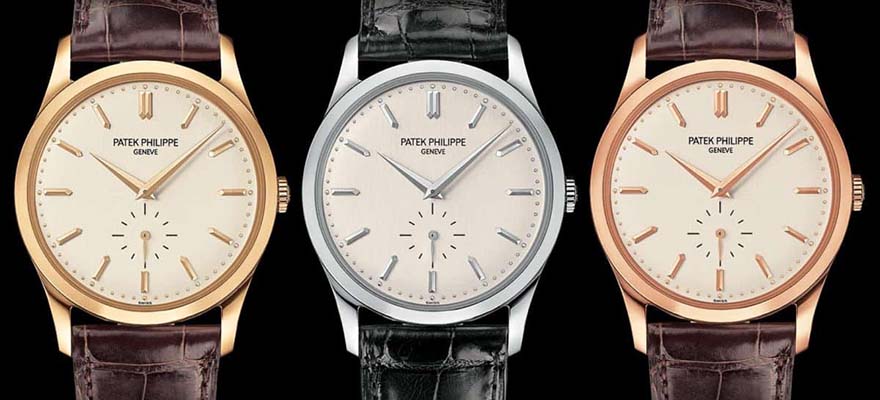
Take Calibre 215 as an example: introduced in 1974, this movement remains in use today in models such as the replica Patek Philippe Calatrava 5196. It is, of course, a time-tested classic—stable, mature, and finished to Patek Philippe’s customary standards of craftsmanship. However, when viewed through the lens of modern watchmaking trends, it now appears relatively conservative: it incorporates no silicon components, lacks an extended power reserve, and struggles to represent the brand’s future trajectory in terms of technical evolution.
A similar situation applies to Calibre 240. Introduced in 1977, this micro-rotor automatic movement has long powered collections such as the World Time 5230 series. While its structural design remains elegant and highly distinctive, from the perspective of the product lifecycle, it too has reached a point where it warrants re-evaluation. For a brand of Patek Philippe’s stature, once a movement has remained in service for an extended period—and a new generation of technical direction begins to take shape—its replacement and modernization become virtually a mere matter of time.
Identifying this trend does not, in fact, require reliance on so-called “insider information.” The truly effective approach is to consistently monitor several public and traceable clues: for instance, new movement patent applications filed by the brand or within the broader industry; new timepieces unveiled at major watchmaking competitions such as the Grand Prix d’Horlogerie de Genève (GPHG); and discussions regarding new technological directions taking place on professional watch forums and within industry circles. Once a new movement appears on the market—one whose functionality, structure, or technical positioning renders it a plausible successor to an existing, older caliber—then the watch models powered by that older movement have, in all likelihood, already landed on the “discontinuation watch list” that merits the closest attention.
2. The Size No Longer Meets Market Demand
Consumer aesthetics and wearing preferences regarding watch dimensions have undergone a significant shift. Today, the overall market acceptance for dress watches with a diameter under 38mm—as well as sports watches under 40mm—is gradually waning. Those dimensions, ranging from 33mm to 37mm—which were considered the standard in the early 21st century—are now, in the eyes of many buyers, no longer aligned with mainstream demand; indeed, they may even appear somewhat out of step with contemporary wearing habits.
The super fake Patek Philippe Calatrava Pilot Travel Time 7234 serves as a highly representative example of this phenomenon. Upon its launch, this timepiece failed to generate sustained buzz and quickly faded from market attention. A key reason for this was that its dimensions failed to align with the prevailing market preferences of the time. Patek Philippe has always been acutely sensitive to such shifts; precisely for this reason, the brand frequently adjusts the structure of its product lines on time, responding directly to market feedback regarding size trends.
Consequently, when assessing whether a particular timepiece possesses lasting viability, size is a critical metric that cannot be overlooked. If a watch’s diameter falls significantly short of the prevailing standards within its specific category, the likelihood of it becoming marginalized—or even eventually being discontinued from the catalog—is typically much higher.
Of course, this assessment is not absolute. A select few models that position “vintage proportions” as a core selling point do not strictly adhere to this logic, as they are designed specifically to appeal to a niche aesthetic sensibility and collector base; their smaller dimensions may, in fact, serve as a distinctive feature. However, for the vast majority of standard collections, if a model’s dimensions are clearly out of step with current market trends, it will often struggle to retain its place in the catalog during the next product update cycle.
3. The Combination of Materials Caused Brand Confusion
1:1 Patek Philippe, a producer, has always sought to deeply intertwine its brand values with the concepts of “scarcity” and “exclusivity.” Consequently, when a steel timepiece—officially priced at approximately $40,000—sees its value inflated to $80,000 or even higher on the secondary market, this is not necessarily a cause for celebration for the brand; rather, it may become an issue requiring immediate attention. This situation not only signifies a stark disconnect between the official retail price and market perception, but it also undermines the image of high-end, understated, and controlled luxury that the brand strives to project.
The discontinuation of the steel Patek Philippe Nautilus Travel Time 5990/1A-001 serves as a quintessential illustration of this logic. When a particular timepiece sustains an excessively high premium on the gray market over a prolonged period, its market profile begins to resemble that of a trendy commodity—frequently traded and feverishly pursued—rather than a luxury good whose scarcity is carefully orchestrated by the brand itself. For Patek Philippe replica, this kind of uncontrolled frenzy is far from ideal. By discontinuing the steel variant while retaining the precious metal versions, the brand is able to regain control over the series’ market dynamics, thereby further reinforcing the sense of prestige and scarcity it has consistently emphasized.
Therefore, if you observe a specific watch series where the steel models remain in a state of extreme scarcity at authorized retailers—making them virtually impossible to acquire—while simultaneously commanding substantial premiums on the secondary market, yet the gold or platinum counterparts within the same series remain relatively accessible and exhibit more stable market performance, this typically serves as a signal warranting close attention. It suggests that the brand has likely recognized the market imbalance surrounding the steel models and may be preparing to restructure its product lineup—specifically by discontinuing the steel variants while preserving the precious metal ones—in an effort to extend the series’ overall lifecycle.
4. Too Many Versions of The Same Thing
Sometimes, when a fake Patek Philippe watchmaker discontinues a timepiece, it is not because of poor sales, but rather because the product’s significance within the series has become too tenuous, to the point where it makes the entire product line appear cumbersome. The PP Calatrava 5196P-001 serves as a quintessential example of this phenomenon. At one time, it was available in multiple versions—including platinum, rose gold, white gold, and yellow gold—yet aside from the difference in case material, the dial design, movement configuration, and overall structure were virtually indistinguishable. In other words, the brand was maintaining multiple, nearly redundant production and management systems for the sake of extremely limited product differentiation.
When a duplicate Patek Philippe dealer begins the process of rationalizing and streamlining its product line, timepieces of this nature—characterized by “minimal differentiation and limited distinctiveness”—are often the first to be phased out. The eventual removal of all versions of the 5196 from the catalog serves as a clear illustration of this principle. Subsequently, the brand shifted its focus toward a new generation of Calatrava models possessing bolder personalities and greater visual distinctiveness, aiming to redefine the series’ image through a clearer and more coherent product language.
Such models—those at risk of being discontinued—can actually be identified in advance. A crucial method of observation is to assess whether the differences between various versions within the same series are truly substantial and meaningful. If, apart from variations in material, different versions lack any other elements that genuinely distinguish their market positioning, they are highly likely to be deemed redundant configurations when the brand undertakes product line streamlining.
The various versions of the replica PP Nautilus 5712 offer an excellent case in point. The leather-strap version was ultimately discontinued, while the steel-bracelet version was retained; the reasoning behind this decision is straightforward. The integrated metal bracelet constitutes one of the most fundamental elements of the Nautilus design language, whereas the leather-strap version, to some extent, dilutes this iconic characteristic. From Patek Philippe’s perspective, although the leather-strap version did exist, it did not constitute an indispensable link within the series.
Therefore, when attempting to determine whether a specific timepiece possesses long-term viability, one might first ask oneself a simple question: Does this particular version genuinely contribute a clear and unique value to the series, or does it merely serve as a disposable extension within the product catalog? The former is far more likely to be retained, while the latter is often the first to be eliminated during the next round of product line adjustments.
5. The Model Ran for Only A Very Short Period—Without Any Explanation
Not every discontinuity signifies a clear strategic masterplan at work. The reasons why certain models exit the market are often quite simple: their dimensions may be out of step with current trends, their aesthetic design fails to resonate with target buyers, or a significant disconnect exists between their pricing and market perception—ultimately resulting in sales performance that falls short of expectations.
For instance, the platinum version of the World Time 5230P—featuring a black dial—remained in the product catalog for less than two years; similarly, certain diamond-set Patek Philippe Aquanaut replica watch models were discontinued less than five years after their launch. Such cases typically suggest that the brand terminated these models not to manufacture scarcity or proactively redefine the value of a collection, but rather because of a tepid market reception—the products themselves simply failed to establish a sufficiently strong foundation of demand.
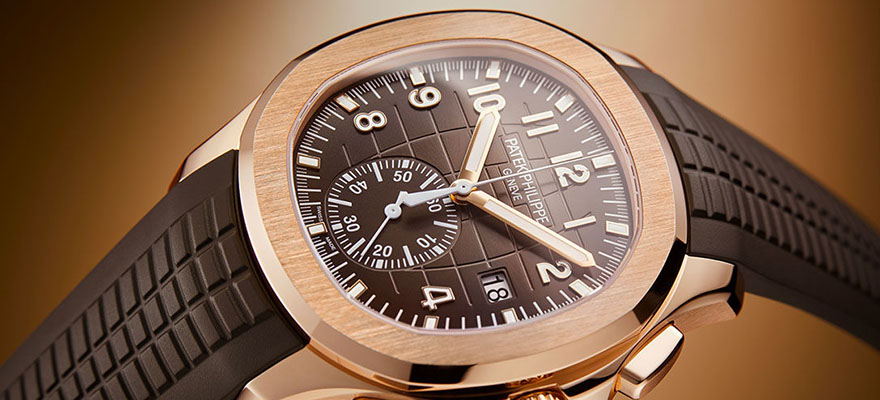
This constitutes the most critical dividing line when assessing the potential value of a discontinued timepiece: Was the watch discontinued because the imitation Patek Philippe was upgrading, restructuring, or repositioning an already successful model? Or was it because the watch failed to gain market acceptance from the very outset? The former scenario often implies that there remains room for future value appreciation; the latter, however, typically lacks that same logical underpinning.
Ultimately, discontinuation in and of itself does not automatically endow a watch with greater collectible value. If a timepiece languished in obscurity with weak demand while it was still in production, it is unlikely to suddenly reverse its fortunes after being discontinued and transform into a highly coveted market rarity. What truly matters is never simply whether a watch has been discontinued, but rather whether the market had already validated its appeal before its discontinuation.
Turning The Discontinuation Intelligence Into Investment Advantage
The truly ideal buying window often occurs between 6 and 18 months before a particular timepiece is likely to be discontinued. During this phase, market prices typically still primarily reflect the watch’s “in-production status”; even for highly sought-after models, the premium generally remains modest—hovering around 10% to 30% above the official retail price. However, once news of a discontinuation is officially confirmed, the market price for that same watch often undergoes a rapid revaluation, with the premium potentially skyrocketing to anywhere between 50% and 200% above the list price. This implies that true profits are not generated by chasing the upward trend after the news breaks, but rather by holding the asset before the market has fully reacted.
Consequently, the essence of this strategy lies not in chasing popular models that are already widely favored, but rather in proactively positioning oneself in models that have not yet garnered significant attention from the majority of buyers, yet have already begun to exhibit signs of impending discontinuation. This approach demands both patience and considerable discipline, as market reactions are not always perfectly synchronized. At times, your judgment may prove to be a year—or even two—ahead of the curve; conversely, a model initially deemed a high-risk candidate for discontinuation might ultimately survive into the next product catalog update. Therefore, the correct approach is not to stake one’s entire capital on a single target, but rather to execute this as a diversified portfolio strategy.
From a portfolio perspective, achieving a success rate of just 60% to 70% across a selection of 5 to 10 potential discontinuation candidates is often sufficient to generate substantial overall returns; even if certain predictions fail to materialize, the underlying profit logic of the overall strategy remains largely unshaken.
A more prudent approach involves allocating approximately 15% to 25% of one’s total watch investment capital to this specific strategy. For instance, if the total value of your collection stands at roughly $200,000, you might allocate between $30,000 and $50,000—diversifying these funds across potential discontinuation candidates featuring different complications, materials, and product lines. Examples might include a rose gold knockoff Patek Philippe World Time model, a stainless steel sports watch, and a complication-equipped Calatrava; each represents a distinct product line with its own unique discontinuation signals and market dynamics. This method of allocation effectively mitigates risk: even if one specific timepiece ultimately delivers lackluster performance, the other models within the portfolio can still serve to bolster the overall strategy’s returns.
A particular caution is warranted: one must not mistake “discontinuation” as a sufficient condition for “value appreciation.” The reason certain watch models are removed from a brand’s catalog is not always because the brand is actively curating scarcity or driving product upgrades; sometimes, it is simply due to poor market reception. Models with extreme dimensions that deviate significantly from current aesthetic trends, complex jewelry-watch models lacking sufficient depth in the secondary market, and niche models that appeared briefly but failed to garner a consensus among collectors—these often resemble “traps” more than “opportunities.” The counterfeit Patek Philippe models truly worthy of attention are those discontinued as a result of product updates, series reboots, or shifts in brand strategy—not those failed creations that were simply weeded out by the market due to their own lack of competitiveness.
To execute this strategy effectively, one must rely on at least three relatively reliable sources of information.
First Source
The first source is “Watches and Wonders”, held annually in April, along with the updated official product catalogs released in its wake. While new releases are undoubtedly important, investors should often pay closer attention to which existing models have quietly vanished from the new catalog. By comparing catalog changes year over year, one can often spot early signs that a brand is about to adjust its product lineup. Frequently, a watch model does not receive a high-profile announcement regarding its retirement; it simply goes “quietly missing.” This very “absence” often serves as a harbinger of impending change.
Second Source
The second source involves patent databases and the continuous coverage provided by specialized media regarding the evolutionary trajectory of watch movements. By tracking the initial launch dates of key movements—and cross-referencing them with their typical replacement cycles—one can make a more rational assessment of where a current watch model stands within its product lifecycle. Once a new movement appears on the replica luxury watches market—particularly one whose technical specifications, functional architecture, or market positioning make it a plausible successor to an older movement—the countdown to the latter’s replacement has likely already begun.
Third Source
The third source is the feedback regarding allocation and inventory levels provided by the network of authorized dealers. Maintaining long-term, stable communication with dealers often grants one access to real-time changes in supply—specifically from the brand’s end—sooner than the open market does. If multiple dealers simultaneously report that allocation quotas for a specific model have tightened, or that shipments have dropped abnormally—while other models in the same series continue to be supplied normally—this is typically a highly significant warning sign. This is because, by the time an official discontinuation announcement is finally issued, the brand’s final batch of that model has often already been quietly sold out. Precisely for this reason, cultivating relationships with dealers—relationships that provide insights into inventory dynamics and allocation cues—is, in reality, one of the most underestimated advantages in the realm of watch investment.
The truly opportune moment to strike is rarely when a single isolated signal appears; rather, it is when multiple indicators begin to converge. For instance, if dealer inventory becomes noticeably tight, the caliber powering the watch has been in service for over 15 years, and the specific model has been conspicuously absent from recent major promotional campaigns or new product announcements, it often signifies that the risk of discontinuation has risen substantially. This is when taking action offers the greatest value proposition. The key lies in striking a balance: neither rushing to place a bet when evidence is insufficient, nor waiting until the brand formally announces discontinuation—at which point market prices have already begun to react violently—only to scramble to chase the rising market.
Those fake watch collectors who consistently generate long-term profits by capitalizing on Patek Philippe’s discontinuation cycles do not necessarily possess some mysterious form of “inside information.” Their success stems less from privileged intelligence and more from a highly systematic approach: they track the right signals, establish their positions well in advance, and maintain the requisite judgment and patience before the general public has even realized that an opportunity has arisen. In other words, the true advantage lies not in “knowing more,” but in “seeing earlier and acting more steadily.” When you execute your strategy in this manner, you will often find that—long before the majority begins debating whether a particular watch constitutes a good investment—you have already secured a far more advantageous position.