
Turn a replica Cartier watch over, and you may find several markings competing for your attention: a name, a short number, a longer string of characters, perhaps a metal hallmark. If you’re trying to identify an inherited watch or check a pre-owned purchase, it’s tempting to assume one of those numbers will explain everything.
The serial number is useful, but its job is narrower than that. It identifies an individual watch and helps connect it to its records. It doesn’t, by itself, prove authenticity or give you a reliable production date.
Getting those distinctions right saves a lot of guesswork. Here’s how to read what’s on the case, compare it with the documents, and investigate anything that doesn’t add up.
Before You Start
- Start with the caseback. Cartier identifies the back of the watch and the warranty card as places to find the serial number.
- Record every marking separately. The serial, case number, and commercial reference serve different purposes.
- Be careful with date charts. A two-digit prefix is not a dependable way to date every older Cartier.
- Check the watch as a whole. Matching numbers are useful evidence, but copied numbers can appear on counterfeits.
Where to Find a Cartier Serial Number
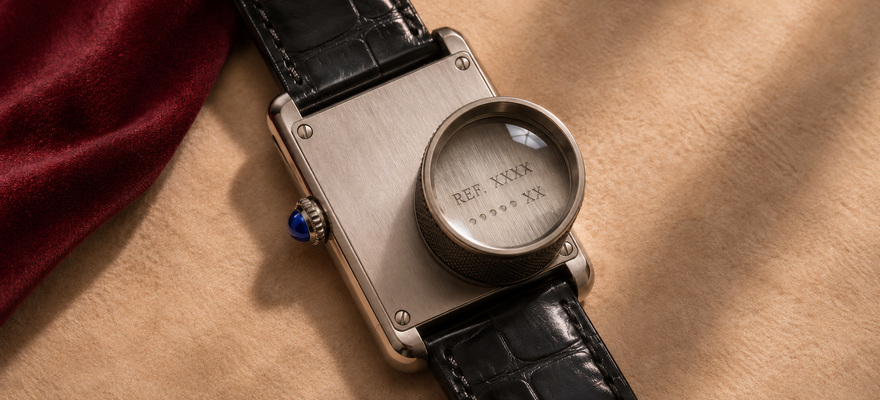
Place the watch face down on a clean, soft cloth and examine the caseback under good light. On many Cartier replica watches, including examples from the Tank, Santos, Panthère, Ballon Bleu, and Pasha collections, the identifying engravings are on the back. Their position and layout vary by reference and generation.
A phone’s close-focus setting can help, but glare often hides more than the camera reveals. Try moving the light to one side rather than aiming it straight at the metal. Take a clear photograph of the entire back, then a closer shot of each line.
Don’t assume the most prominent number is the serial. A shorter case number may sit beside it, and other markings can describe the metal or the watch’s specifications. Write down the characters exactly as they appear, including letters and any spaces between groups.
If the back is difficult to read or the watch has an unfamiliar vintage layout, leave it intact. Have a watchmaker locate and document any internal markings. Opening the case yourself can damage the watch or disturb its seals.
Serial Number, Case Number, or Reference?
These terms are often used loosely in listings. A seller may call the short number on the back a “reference,” while the paperwork shows a longer product code. That difference isn’t automatically a problem; first establish which identifier each person means.
| Marking | What it identifies | How to use it |
|---|---|---|
| Serial number | The individual watch, rather than every example of a model. | Compare it character for character with documents that record the watch’s serial. |
| Case number | A case or model designation shared by other watches. Many familiar examples have four digits; older numbering can differ. | Check that it belongs with the model, size, and case configuration in front of you. |
| Commercial reference | The cataloged version of the watch. Modern references commonly use a longer alphanumeric code beginning with W. | Use it to research the exact model’s published specifications. It may differ from the shorter case marking. |
| Edition number | A watch’s position within a numbered edition, when shown as a number out of a stated total. | Check the edition details separately. An edition number should not be mistaken for a production year. |
For example, two watches of the same reference can share a case designation and still have different serial numbers. Conversely, two watches that look similar from the front may have different commercial references because their size, movement, or materials differ.
What Does a Fake Cartier Serial Number Look Like?
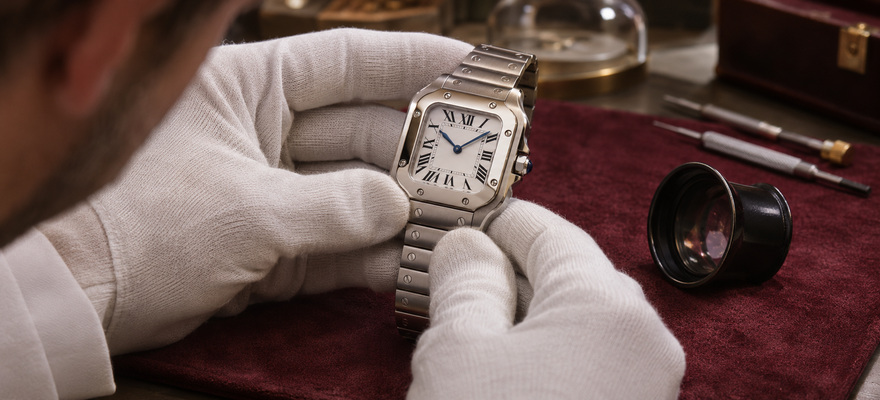
There isn’t one format that covers Cartier’s entire watchmaking history. Depending on the piece, you may see a numeric sequence or a combination of numbers and letters. A six-digit sequence followed by two letters is a familiar format on many later watches, but it is not a universal rule.
Older watches need particular care. Case construction, production arrangements, and numbering practices changed over time, so a format seen on one vintage reference may not be a useful comparison for another.
Use the format to guide further research. Don’t use character count alone to declare a watch genuine, counterfeit, or a particular age. The same caution applies to websites that assign every serial format to a sharply defined era: a neat chart can make the underlying evidence look much stronger than it is.
Can the Serial Number Tell You the Year?
Not reliably on its own. You’ll encounter guides claiming that the first two digits of a pre-2009 Cartier serial reveal its production year. Treat that as an unverified shortcut, not a rule you can safely apply across the brand.
A number beginning with “94” does not, without supporting evidence, establish that the watch was made in 1994. Nor should a pair of letters automatically be treated as a published factory date code. There is no dependable public Cartier serial-to-year chart covering all models and periods.
To estimate a watch’s age, work from several pieces of evidence:
- Identify the exact reference. Start with the case markings and any product reference on the original paperwork.
- Establish when that version existed. A collection’s introduction gives an earliest possible date, but a later redesign may narrow the range considerably.
- Check the configuration. Case dimensions, dial details, bracelet construction, and the correct movement can help distinguish one generation from another.
- Read each document for what it actually records. A sale date, service date, and manufacturing date are different things.
- Keep the conclusion as precise as the evidence allows. Sometimes a production period is supportable; an exact year isn’t.
The Tank Française is a useful example. Cartier dates the collection’s introduction to 1996. A watch correctly identified as a Cartier Tank Française replica therefore cannot be a 1980s example. That establishes a boundary, not the year any individual watch was made.
Likewise, a matching receipt from 2001 can document a retail sale in 2001. The watch might have been manufactured earlier. A later first sale is not, by itself, evidence that the paperwork is wrong.
| Evidence | What it can establish | What it cannot establish alone |
|---|---|---|
| Dated sales receipt | A recorded sale, if the receipt can be tied to this watch. | The day or year the watch was manufactured. |
| Warranty document | The warranty details and identifiers actually stated on that document. | A complete ownership history or proof that every component is original. |
| Service invoice | A recorded intervention and any work or parts listed. | The watch’s original production date or an unchanged factory configuration. |
| Catalog or model history | When a model or documented version was offered. | The precise production date of one particular watch. |
Match the Watch to Its Paperwork
Lay out the warranty card, receipt, and service invoices beside your caseback photograph. Compare the serial wherever it appears. Check letters as carefully as digits; a faint engraving or a poor photograph can make similar characters hard to distinguish.
Then compare the reference information. Remember that a full commercial reference and a shorter case designation may describe the same watch without being identical strings. Look for an established connection between them rather than expecting every number on every document to match.
If something disagrees, start with ordinary explanations: a transcription error, a misread character, or paperwork accidentally paired with the wrong watch. Ask for clarification and supporting records. A seller’s verbal explanation is a starting point, not a substitute for resolving the discrepancy.
A box is useful to have, but it doesn’t connect itself to a particular watch. Missing papers also don’t automatically make a watch counterfeit. They leave less history available to check, which makes a careful examination more important.
What a Serial Check Can—and Can’t—Tell You
A serial check can reveal inconsistencies worth investigating. It cannot authenticate the movement, establish whether a dial has been refinished, or tell you how much metal a case has lost to polishing.
Counterfeit watches can carry numbers copied from genuine examples. Finding a matching number online therefore doesn’t prove that the watch in your hand is genuine. Finding the same number in an old listing may also reflect a previous sale of that very watch. Context matters.
A proper examination goes further:
- Engravings: Assess their placement, lettering, and execution against appropriate examples of the same reference. Wear, polishing, and repairs can affect how they look.
- Case and bracelet: Check dimensions, construction, finishing, and whether the components belong together.
- Dial, hands, and crown: Compare the details with the correct version, allowing for documented service replacements where relevant.
- Movement: Have a qualified watchmaker check the caliber and its suitability for the reference when an internal examination is needed.
- Documents: Assess the records themselves, as well as their connection to the watch.
Be wary of single-feature verdicts. Sharp engraving doesn’t guarantee authenticity, and a worn engraving doesn’t settle the question in the other direction. A sound assessment explains how the details fit together and identifies anything that remains uncertain.
Online Lookups and Cartier Care
Cartier Care lets owners register eligible watches using the serial number or the QR code on the warranty card. That makes registration a useful ownership service. It should not be treated as an independent examination of a watch offered for sale.
A website recognizing a number cannot establish that the physical watch carrying it is authentic. The same applies to a seller’s screenshot of a successful registration.
For service questions or help understanding existing Cartier documents, contact Cartier directly. If you need a pre-purchase authentication assessment, confirm exactly what service is available before making an appointment. Don’t assume a boutique will issue an authenticity certificate for a secondhand purchase; Cartier’s published FAQ limits authentication assistance for items acquired outside its authorized sales network.
Keep a Useful Record of Your Watch
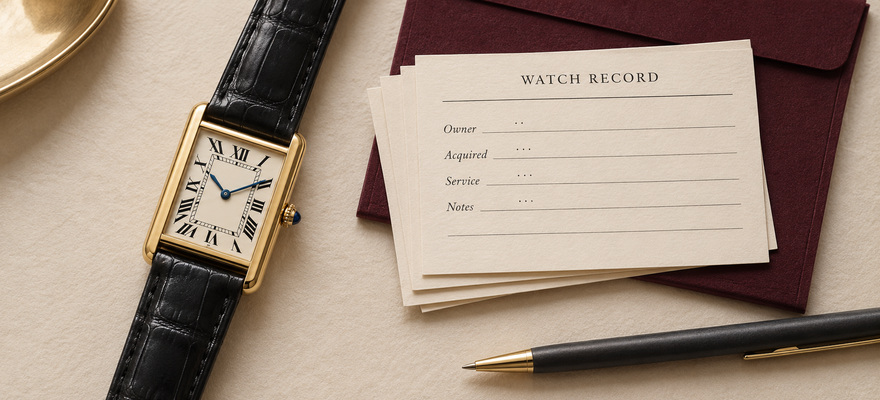
Once you’ve recorded the identifiers, save clear photographs of the dial, caseback, bracelet or strap, and clasp alongside the paperwork. Note when you acquired the watch and keep subsequent service invoices in the same folder.
If you later sell it, describe what those records actually support. “Purchased in 2001, with matching receipt” is more useful than an exact manufacturing year inferred from an online decoder. Disclose known replacement parts and unresolved discrepancies rather than leaving the next owner to discover them.
For public listings, consider masking part of the serial in photographs while keeping complete images in your own records. Share the full number privately when it is needed for a legitimate inspection, insurance record, or transaction.
Frequently Asked Questions
Can I Look up My Cartier Serial Number Online?
You can use the serial for Cartier Care registration where applicable. There isn’t a public Cartier lookup that provides a complete authentication verdict or a reliable manufacturing year for every watch. Treat third-party date estimates as claims to verify.
Do the First Two Digits Tell Me When My Cartier Was Made?
Not reliably across Cartier’s different models and periods. That shortcut appears in some guides, but it should not override the reference, documented model history, or records tied to the watch.
Where Should I Look on an Imitation Cartier Santos or Tank?
Start with the exterior of the caseback and photograph all the markings. The arrangement varies by version. If you still can’t identify the serial, compare the warranty document or ask a watchmaker for help rather than opening the case.
Does a Matching Warranty Card Prove the Watch is Real?
No. Matching details help connect a document to a watch, but both the watch and the document need to be assessed. Numbers and paperwork can be copied.
What If the Serial is Faint or Missing?
Try a clear close-up under angled light. Don’t polish, scrape, or re-engrave the area. Have a specialist assess the markings and possible reasons for their condition; don’t guess from a blurry photograph.
Can a Cartier Without Its Original Papers Still Be Genuine?
Yes. Documents can be lost over decades of ownership. Their absence reduces the available history, but authenticity depends on examining the watch itself, not simply checking whether a box and card are present.


