
The appeal of a discontinued Audemars Piguet replica often comes down to a detail you can no longer buy new: a particular dial, an older movement, or a case that wears differently from its replacement. For someone who wants that exact combination, the pre-owned market becomes the only practical place to look.
That helps explain the interest in retired Royal Oak and Royal Oak Offshore references. It does not mean every discontinued fake AP becomes more valuable. Some attract a lasting following; others remain available for years without much competition. The distinction usually lies in the watch itself, its condition, and what a buyer is being asked to pay.
Here are the references and details that make this part of the super clone AP catalog worth understanding.
What Discontinued Actually Means
A discontinued reference has left production. That tells you something about supply, but very little about demand. It also does not mean all remaining watches have been sold: dealers and private owners can still bring unworn examples to market.
It helps to separate three situations. A whole model generation may have been replaced, one dial-and-metal combination may have been withdrawn, or a numbered edition may have reached its announced production limit. Those are different reasons for a watch to become unavailable from the manufacturer.
The Royal Oak Jumbo illustrates why that distinction matters. The 15202 was succeeded by the 16202 in 2022. They are separate references with different movements. A discussion of the retired 15202 should not treat the 16202 as though it were the same discontinued watch. AP’s history of the Jumbo documents that change.
The Main Areas of Collector Interest
| Reference or category | What gives it character | What deserves a closer look |
|---|---|---|
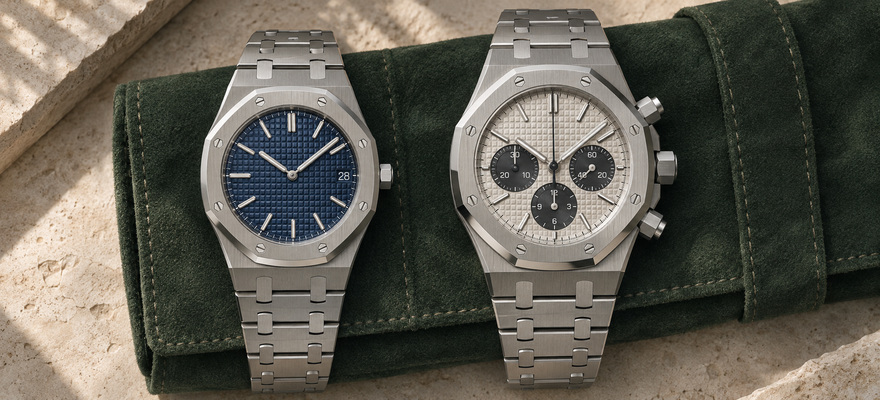
| Royal Oak Jumbo 15202ST | A slim 39 mm steel case and the historic Caliber 2121. | Dial generation, case geometry, bracelet condition, and service replacements. |
| Royal Oak Chronograph 26331ST | A 41 mm case, contrasting counters, and Caliber 2385. | The exact dial version, chronograph operation, and finishing. |
| Retired Precious-metal Royal Oaks | Specific combinations of metal, dial, size, and surface treatment. | Whether the complete reference is genuinely retired and how its finish has been maintained. |
| Earlier Royal Oak Offshore References | Bolder cases, distinctive color schemes, and a different presence on the wrist. | Case wear, pushers, strap or bracelet, clasp, and documented repairs. |
| Numbered and Collaborative Editions | A defined production run and a specific design or collaboration. | The correct edition, original accessories, condition, and actual buyer demand. |
Royal Oak Jumbo 15202ST: The Attraction of an Older Movement
The 15202ST has a clear reason to interest collectors beyond its discontinued status. It combines the Royal Oak’s slender steel proportions with Caliber 2121, the movement family associated with the original Royal Oak of 1972. AP records the caliber’s retirement at the end of 2021; the succeeding Jumbo generation uses Caliber 7121.
For an enthusiast, that mechanical connection can be part of the pleasure of ownership. The newer movement offers its own advantages, but a collector may prefer the older construction for the period it represents. Neither preference requires a prediction about resale value.
Not every Audemars Piguet Royal Oak Jumbo 15202ST replica looks the same. The reference spans different dial executions, including the 2012 revision with a Petite Tapisserie dial and the AP monogram at 6 o’clock. Two listings carrying the same shortened reference can therefore be less comparable than they first appear.
Look closely at the bezel’s outline, the transition between brushed surfaces and polished edges, and the bracelet’s fit. A convincing description should explain which version is being offered and what is known about its service history. The word “rare” adds little if those basics are missing.
Royal Oak Chronograph 26331ST: A Different Reason to Look Back
The 26331ST appeals to a different taste. Its counters give the dial more visual weight, while the integrated bracelet keeps it firmly within the classic Audemars Piguet Royal Oak replica family. AP’s published specifications identify a 41 mm steel case, an 11 mm thickness, and Caliber 2385.
Those proportions are worth considering in person. A watch can have the same stated diameter as a later reference and still sit differently on the wrist. Dial color and contrasting subdials also change its character more than a small listing photograph suggests.
Compare the full reference, including its suffix, before comparing prices. Ask for a demonstration of the chronograph starting, stopping, and resetting, along with a recent condition assessment. A pleasing dial does not make an overdue repair less expensive.
Precious-Metal Royal Oaks: The Exact Configuration Matters
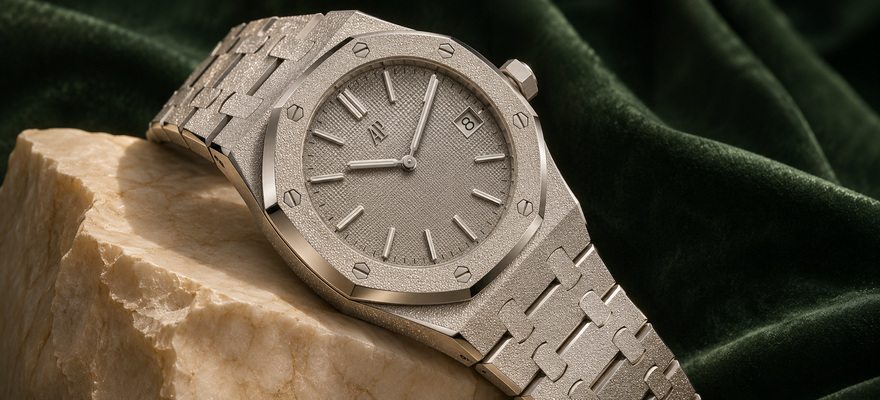
A gold Royal Oak has a different feel from a steel example, both in its weight and in the way light moves across the bracelet. Among retired references, the interest often centers on a particular combination: white gold with an understated dial, warm pink gold with a contrasting face, or an unusual finish that changes the watch’s appearance completely.
Gold alone does not establish collector demand. A higher original retail price does not guarantee a larger resale premium, and a small production run does not tell you how many people want the watch today.
Frosted Gold is a useful example of an identifiable design feature. Developed with jewelry designer Carolina Bucci, the finish uses tiny indentations made with a diamond-tipped tool to create a shimmering surface. It is a treatment of the gold itself, rather than a layer of diamond setting.
The finish appears across different AP replica references, so “Frosted Gold” is not another way of saying “discontinued.” Verify the exact model. On a pre-owned example, examine how the textured surfaces meet the polished edges and ask whether any refinishing has been carried out.
Royal Oak Offshore: Collect the Version You Actually Like
The Offshore offers a more assertive interpretation of the Royal Oak. Its thicker case, larger controls, and strap options give it a different feel from the Jumbo. Earlier references, including the 42 mm 26470ST chronographs, are worth studying as individual configurations rather than treating the entire Audemars Piguet Royal Oak Offshore replica range as one market.
A dark dial on rubber and a lighter dial on leather can feel like very different watches. An unusual color scheme may be the reason someone wants a particular reference, but it may also appeal to a narrower group of buyers. Distinctive does not necessarily mean easy to resell.
Condition checks should extend beyond the dial. Inspect the bezel, case edges, crown, pushers, strap attachment, and clasp. Ask which straps and buckles are included and whether they are appropriate for the reference. Replacement rubber is a normal maintenance consideration; an incorrect clasp or an undocumented case repair is a different issue.
If water resistance matters to how you intend to wear the watch, request a recent pressure-test result. An original specification does not establish the present condition of an older watch’s seals.

Limited Editions Need Their Own Research
Special editions can have a compelling identity, but their names and references need to be right. The Royal Oak Concept Black Panther Flying Tourbillon is reference 26620IO, produced in an edition of 250 pieces. The Royal Oak Offshore Survivor is reference 26165IO, issued in a run of 1,000.
These are very different watches. The Black Panther belongs to the Audemars Piguet Royal Oak Concept replica collection and centers on a sculpted Marvel character and a flying tourbillon. The Survivor is an Offshore chronograph with blackened titanium construction and prominent pusher guards.
A published edition size gives you a fact about production. It does not establish how often the watch changes hands or what the next buyer will pay. Look for completed sales of the same reference, and account for differences in condition and accessories. A result for a unique charity piece is not a useful substitute for an ordinary production example.
Condition Can Matter More Than the Reference’s Reputation
The Royal Oak’s appeal depends heavily on its finishing. Broad-brushed surfaces meet narrow polished bevels, and the bracelet carries those transitions from one link to the next. Excessive refinishing can soften the geometry that gives the watch its shape.
That does not make every serviced or refinished example undesirable. The useful questions are what work was done, who performed it, and how the watch looks now. A claim that a watch is “unpolished” should be supported by its condition and history, not accepted because the word appears in a listing.
- Case and bezel: Examine the outline, bevels, screw heads, and consistency of the finish.
- Dial and hands: Establish whether they are appropriate for the version and whether replacements are documented.
- Bracelet and clasp: Check fit, wear, operation, and the number of included links.
- Mechanical condition: Review service records and have unresolved issues assessed before purchase.
- Accessories: Confirm exactly which box, documents, straps, and spare parts accompany the watch.
A full set is useful, but it does not make the watch itself correct. Nor does a space where the original box should be make an otherwise sound example counterfeit.
Read AP Documents for What They Actually Confirm
Audemars Piguet distinguishes between an Extract from the Archives and a Certificate of Authenticity. The extract confirms that the stated case and movement numbers appear in AP’s records. It does not authenticate the physical watch.
The certificate serves a different purpose: AP explains that its experts in Le Brassus must examine the watch before issuing it. The document addresses the authenticity of the watch, its materials, and its components. Details are available through AP’s official service information.
Service invoices add another piece of history. Read the work description, not just the date. A document may identify replaced parts or refinishing that matters to your assessment. It is also worth discussing service options for an older or unusual reference before you commit to it.
How to Judge a Price Without Getting Caught Up in the Story
Start with comparable watches: the same complete reference, dial, metal, approximate period, and condition. A broad range labeled “Royal Oak prices” is too vague to tell you whether a particular example is reasonably priced.
Separate asking prices from completed sales. An ambitious listing can stay online for months. Auction results also need context, including the sale date, the condition report, and whether the published figure includes the buyer’s premium.
Then account for ownership and selling costs. Servicing, insurance, transaction fees, and the difference between a dealer’s buying and selling prices can all affect the result. A watch selling above its original retail price does not establish that someone buying it today will make a profit.
This is why blanket claims that discontinued AP replica watches keep rising are unhelpful. Prices can move in either direction, and enthusiasm for one reference does not automatically carry over to another.
Choose the Details You Want to Live With
The most satisfying reason to pursue a retired AP is that it offers something you prefer: the 15202’s movement, a particular chronograph dial, an older Offshore’s proportions, or a precise combination of gold and finish.
Be clear about that preference before judging a listing. Ask for the full reference, sharp photographs, a candid condition description, and the available service records. Compare the watch with similar examples, then decide whether its specific qualities justify the price to you.
A discontinued reference can be a rewarding addition to a collection. Its appeal should still be visible when you put the price chart away.


